What do you think about this?
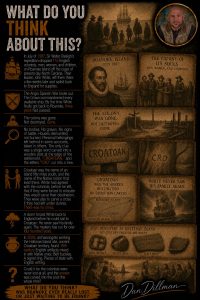
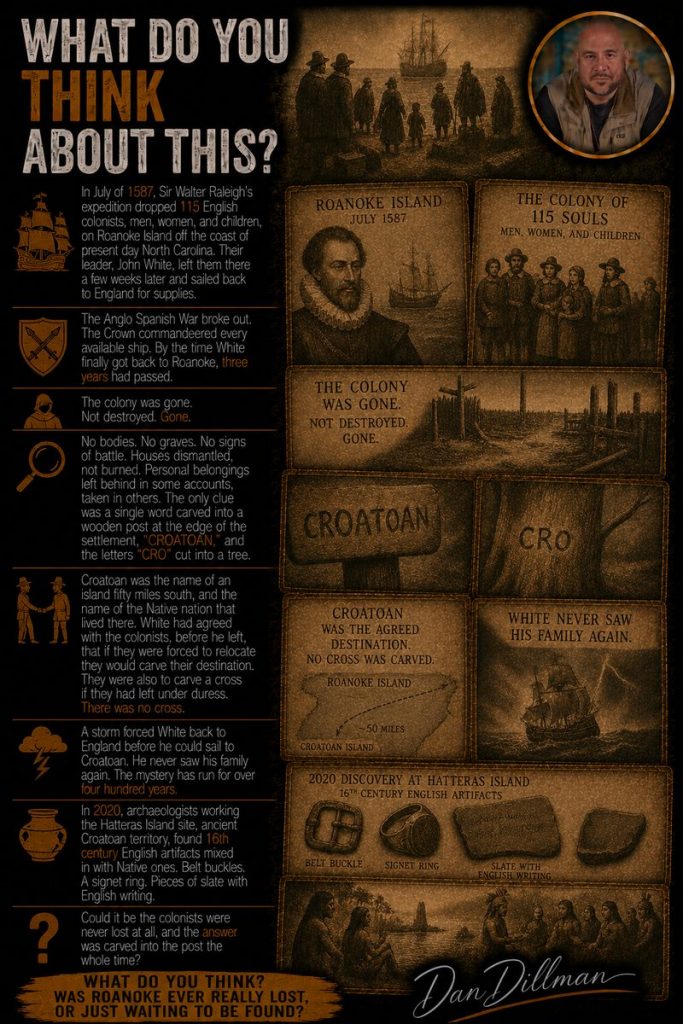
In July of 1587, Sir Walter Raleigh’s expedition dropped 115 English colonists, men, women, and children, on Roanoke Island off the coast of present day North Carolina. Their leader, John White, left them there a few weeks later and sailed back to England for supplies.
The Anglo Spanish War broke out. The Crown commandeered every available ship. By the time White finally got back to Roanoke, three years had passed.
The colony was gone. Not destroyed. Gone.
No bodies. No graves. No signs of battle. Houses dismantled, not burned. Personal belongings left behind in some accounts, taken in others. The only clue was a single word carved into a wooden post at the edge of the settlement, “CROATOAN,” and the letters “CRO” cut into a tree.
Croatoan was the name of an island fifty miles south, and the name of the Native nation that lived there. White had agreed with the colonists, before he left, that if they were forced to relocate they would carve their destination. They were also to carve a cross if they had left under duress. There was no cross.
A storm forced White back to England before he could sail to Croatoan. He never saw his family again. The mystery has run for over four hundred years.
In 2020, archaeologists working the Hatteras Island site, ancient Croatoan territory, found 16th century English artifacts mixed in with Native ones. Belt buckles. A signet ring. Pieces of slate with English writing.
Could it be the colonists were never lost at all, and the answer was carved into the post the whole time?